
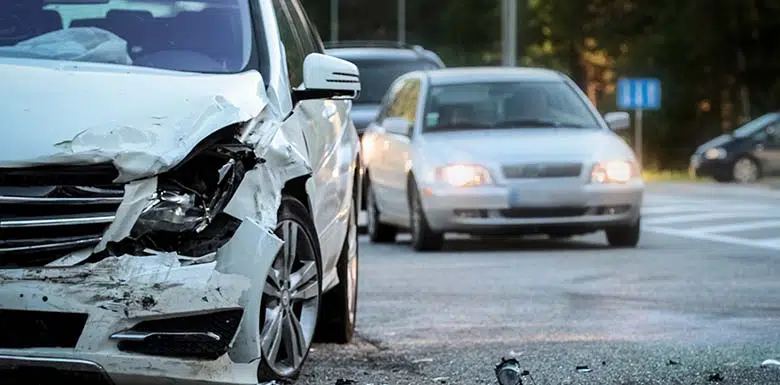
A hit-and-run accident is one of the most stressful and frustrating situations you can face on the road. When another driver flees the scene, leaving you injured and facing vehicle damage, it adds a layer of complexity to an already traumatic event. As experienced car accident lawyers in Las Vegas, the team at Oronoz & Ericsson understands the unique challenges hit-and-run victims face both legally and personally.
Nevada has strict laws governing hit-and-run accidents, and knowing your rights and obligations can make a critical difference in your recovery. This comprehensive guide walks you through the steps to take immediately after a hit-and-run, how to report the incident to police, how to handle your insurance claim, and most importantly, how to protect your legal rights and maximize your compensation.
What Is a Hit and Run Under Nevada Law?
In Nevada, a hit-and-run is defined as leaving the scene of a vehicle accident without providing identification, contact information, or help to the other party involved. This definition applies whether the accident caused property damage, injuries, or death. Many drivers mistakenly believe that a hit-and-run only applies if someone is injured. This is false, even a minor fender-bender becomes a criminal hit-and-run if the driver leaves the scene without providing their information.
Nevada Hit & Run Penalties and Legal Obligations
Understanding Nevada’s hit-and-run laws is essential for both victims seeking compensation and for anyone involved in an accident. Nevada law imposes criminal penalties that escalate based on the severity of the accident.
NRS 484E.010: Duty to Stop
Nevada Revised Statutes Section 484E.010 establishes the legal duty to stop at the scene of an accident. This statute requires drivers involved in an accident to immediately stop the vehicle at the scene, remain at the scene until providing their name, address, driver license number, vehicle registration number, and proof of insurance, and provide reasonable assistance to injured parties, including notifying emergency services. The statute applies to all accidents regardless of fault.
Criminal Penalties
Hit-and-run penalties in Nevada vary depending on the circumstances. Property Damage Only: misdemeanor with fines up to $1,000 and possible jail time of up to six months. Injury: Category B felony with fines up to $5,000 and imprisonment from 2 to 15 years. Death: Category A felony with potential sentences of 25 years to life imprisonment.
As a victim, understanding these penalties is important because it influences how law enforcement prioritizes your case and what investigative resources they allocate.
Step-by-Step: What to Do Immediately After a Hit & Run
The moments immediately following a hit-and-run accident are critical. Your actions during this time can directly impact your ability to recover compensation, aid in the police investigation, and protect your legal rights.
Step 1 — Ensure Your Safety
Your personal safety is the priority. If you are able to move your vehicle safely out of traffic, do so. If you feel unsafe or your vehicle cannot be moved, stay inside with your doors locked and call 911 immediately. Even if you think your injuries are minor, get checked out by medical professionals. Hit-and-run accidents often involve significant forces, and some injuries (like concussions or internal bleeding) may not be immediately apparent.
Step 2 — Gather Evidence at the Scene
While you wait for police to arrive, gather as much evidence as possible. Photograph or video record your vehicle from multiple angles, the accident scene including road conditions and traffic signals, any tire marks or debris, and your injuries. Note the exact time, date, location, weather conditions, and road surface conditions. If traffic cameras or nearby businesses have surveillance cameras, note their locations for later reference.
Step 3 — Obtain Witness Information
Witnesses are invaluable in hit-and-run cases because they can describe the fleeing vehicle and sometimes provide partial license plate information. For each witness, obtain their full name, phone number, email address, and a description of what they saw. If possible, have witnesses write down their observations or record a video statement on your phone.
Report to LVMPD: The Las Vegas Police Process
Filing an official police report is essential for your insurance claim and any future legal action. In Nevada, hit-and-run is a crime, and law enforcement has the obligation and resources to investigate.
Filing a Hit & Run Report with LVMPD
Contact the Las Vegas Metropolitan Police Department (LVMPD) to file a hit-and-run report. Call the LVMPD non-emergency line at (702) 828-3111 if no injuries were reported, call 911 immediately if injuries are present, or go directly to your nearest LVMPD police station. Provide the dispatcher or officer with your identification, vehicle information, the exact location and time of the accident, a description of the other vehicle, names and contact information of witnesses, and photos or videos from the scene. Police will assign a case number, keep this number for your records.
What the Police Will Investigate
Once you file a report, LVMPD will search their database for matching vehicles, review surveillance footage, canvass the neighborhood for witnesses, use license plate reader technology if available, and coordinate with the District Attorney’s office on felony charges. Investigations take time, but with quality witness statements and video evidence, police can often identify the at-fault driver within weeks or months.
Document Your Injuries and Medical Treatment
Documenting your injuries is critical for your personal injury claim. Seek immediate medical attention if you experience any pain, dizziness, or other symptoms. Follow all medical advice and attend all recommended appointments. Keep detailed records of all medical visits, dates, providers, diagnoses, and treatments. Maintain receipts for all expenses and document your pain levels daily. This documentation becomes evidence that supports your compensation claim.
Insurance Coverage for Hit & Run in Nevada
When the at-fault driver flees the scene, your own auto insurance becomes critical to your recovery. Understanding the different types of coverage available is essential.
Uninsured Motorist (UM) Coverage
UM coverage is designed specifically for situations where the at-fault driver is uninsured, underinsured, or unidentified. UM coverage applies to hit-and-run accidents because the fleeing driver is effectively uninsured from your perspective. It pays for medical expenses, lost wages, pain and suffering, and property damage. Nevada requires UM coverage of at least $25,000 per person and $50,000 per accident. Filing a UM claim requires that you report the accident to police and file a claim with your own insurer.
Underinsured Motorist (UIM) Coverage
UIM coverage applies if the at-fault driver is identified but carries liability insurance with limits below your actual damages. UIM bridges the gap between the at-fault driver’s insurance limits and your actual expenses.
Medical Payments (MedPay) Coverage
MedPay is no-fault coverage that reimburses reasonable medical expenses regardless of fault. It covers emergency room treatment, surgery, ambulance services, doctor visits, physical therapy, and some mental health treatment. Limits typically range from $1,000 to $10,000. MedPay can cover initial medical bills while your personal injury claim is being resolved.
Collision Coverage
Collision coverage pays for damage to your vehicle caused by a collision, regardless of fault. This is essential for hit-and-run accidents, as it covers the cost of repairing or replacing your vehicle without requiring you to prove the other driver’s identity or insurance. Your insurer may recover the deductible from the at-fault driver once identified.
Common Hit & Run Scenarios in Las Vegas
Hit-and-run accidents occur in different contexts throughout Las Vegas, each with unique challenges.
Hit & Runs on the Las Vegas Strip
The Strip experiences extremely high traffic and pedestrian volume, especially during peak hours and weekends. Extensive video surveillance is available from casinos and businesses, multiple witnesses are typically present, and traffic congestion often slows the fleeing vehicle’s escape. If you are involved in a hit-and-run on the Strip, immediately contact security at the nearest casino, they often have superior surveillance capabilities and may identify the fleeing vehicle within hours.
I-15 Corridor Incidents
The I-15 corridor sees thousands of vehicle accidents annually. Hit-and-runs on I-15 involve higher-speed impacts, and the fleeing driver may exit at any of dozens of exits. Nevada Highway Patrol (NHP) has jurisdiction and maintains detailed incident records. Contact NHP at *NHP (*67) on your phone or (702) 828-3111. Commercial vehicles are easier to identify through DMV records and fleet registries.
Residential Area Hit & Runs
Residential neighborhoods are common sites for hit-and-run accidents. These incidents often have fewer witnesses but are frequently captured on home security cameras and doorbell cameras (such as Ring). Canvass neighbors and ask for footage, a single doorbell camera can provide the fleeing vehicle’s license plate, leading directly to the driver.
Frequently Asked Questions About Hit & Runs in Nevada
Can the police find the hit-and-run driver?
Yes, in many cases, though the time required depends on the quality of evidence. If you have the license plate number, identification is possible within days. If only a vehicle description exists, it may take weeks or months. Regardless, reporting the incident to police is essential, without a police report, you cannot pursue UM coverage or civil remedies.
What if I don’t have uninsured motorist coverage?
Nevada law requires UM coverage, so if you have an active insurance policy, you likely have at least the minimum UM limits. Check your policy declarations page. If you somehow lack UM coverage, consult an attorney immediately about alternative remedies.
How long do I have to file a claim?
Nevada law imposes strict deadlines. A UM claim must be filed with your insurance company within one year of the accident. A personal injury lawsuit must be filed within two years. Do not delay in reporting the accident to police and your insurance company.
Will my insurance rates increase after a hit-and-run?
Hit-and-run accidents where you are the victim rarely result in rate increases, as you were not at fault. However, some insurers impose surcharges for any claim. Review your policy or contact your agent.
Can I settle with the at-fault driver privately if they are found?
Yes, once the driver is identified, you can attempt to settle directly with them or their insurance company. However, any settlement should be reviewed by an attorney to ensure you are not waiving valuable rights. Never accept a check without consulting a lawyer first.
Contact a Las Vegas Hit & Run Attorney at Oronoz & Ericsson
Do not navigate a hit-and-run accident alone. The experienced attorneys at Oronoz & Ericsson handle all aspects of your case from initial investigation through settlement or trial, ensuring you focus on recovery while we focus on results. We work on a contingency basis, you pay nothing unless we recover compensation on your behalf.
Call (702) 710-5628 now to speak with an experienced personal injury attorney about your hit-and-run accident. Time is critical, evidence is time-sensitive, witness memories fade, and insurance companies are quicker to deny claims when no attorney is involved. Contact us today.