
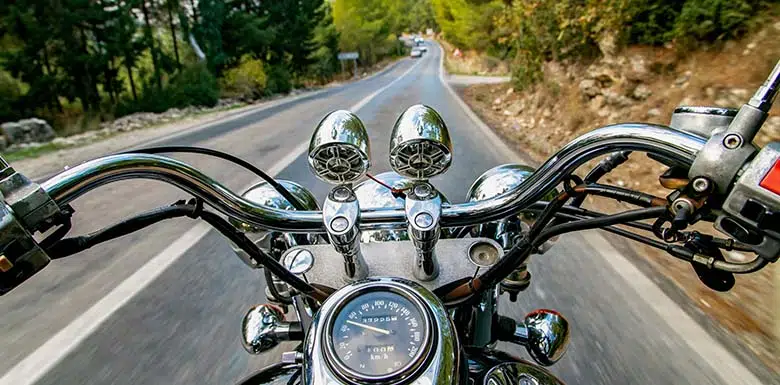
Every year, riders across the Las Vegas valley saddle up and head out onto roads that look wide open, sun-drenched, and inviting. But beneath that surface lies a troubling reality. Clark County — home to Las Vegas, Henderson, and North Las Vegas — consistently ranks among the most dangerous places in Nevada, and indeed the entire country, for motorcyclists. If you ride in this valley, understanding the risks is not optional. It could save your life. And if you have already been hurt, knowing your rights is just as important.
At Oronoz & Ericsson, our motorcycle accident lawyers in Las Vegas have spent decades helping injured riders navigate the aftermath of devastating crashes. We have seen how quickly a routine commute or weekend ride can turn catastrophic on these roads. This guide is designed to give you a thorough, honest look at why Clark County is so hazardous for motorcyclists, where the most dangerous spots are, what injuries riders typically suffer, and what you should do if you or someone you love is involved in a motorcycle accident in Las Vegas, Henderson, or North Las Vegas.
The Numbers Tell a Sobering Story
Let us start with what the data actually says, because the statistics alone should give every rider pause.
Motorcycle Fatalities in Nevada Are Rising
Nevada recorded 83 motorcycle fatalities statewide in 2025, following 82 in 2024 and 69 in 2023. While overall traffic deaths in Nevada declined roughly nine percent in 2025, falling to 381 from 420 in 2024, motorcyclists continued to bear a disproportionate share of those losses.
Riders represent less than one percent of vehicle miles traveled on Nevada roads, yet they account for roughly 24 percent of all traffic fatalities statewide. To put it plainly: if you are on a motorcycle in Nevada, you are dramatically overrepresented in the fatality numbers.
Clark County Sees the Majority of Deaths
Clark County is where most of those deaths happen. In 2025, the county recorded 58 motorcycle deaths, down modestly from 67 in 2024. While that improvement is welcome, the raw numbers remain staggering. Approximately three-quarters of all motorcycle fatalities in Nevada occur in the Las Vegas metropolitan area. And the early numbers for 2026 are not encouraging either. In January 2026, Clark County saw nine deadly motorcycle crashes, up fifty percent from six in the same month the previous year.
Risk Compared to Passenger Vehicles
Nationally, motorcyclists are about 28 times more likely per mile traveled to die in a crash than occupants of passenger vehicles. In Clark County, the combination of urban road design, heavy tourism traffic, impaired driving, and year-round riding conditions amplifies that already extreme risk.
Looking at the longer trend, Nevada’s motorcycle fatality rate per 10,000 registered motorcycles has fluctuated but trended upward over the past decade. In 2017, the state recorded 59 motorcycle fatalities. By 2022, that number had climbed to 88 — the deadliest year in recent memory. The rate dipped in 2023, then surged again in 2024, and held steady in 2025. With approximately 86,000 registered motorcycles on Nevada roads, the fatality rate hovers near 9.65 deaths per 10,000 registered bikes. That rate places Nevada among the most dangerous states in the nation for motorcycling.
Official Warning from LVMPD
As Sheriff Kevin McMahill of the Las Vegas Metropolitan Police Department (LVMPD) put it in 2025, in Las Vegas, you are more likely to die in a traffic accident than from an act of homicidal violence. For motorcyclists, that risk is magnified many times over. Through early December 2025, the LVMPD reported that motorcycle and moped riders accounted for 33 of the 148 traffic deaths in their jurisdiction — making riders the second-largest category of fatalities after pedestrians.
What Makes Clark County So Dangerous for Motorcyclists
It would be easy to blame reckless riders or a single factor for these numbers. The reality is more complex. Several structural, behavioral, and environmental features of the Las Vegas valley combine to create a uniquely hazardous environment for anyone on two wheels.
Wide, High-Speed Urban Arterials
The Las Vegas valley is built around long, wide arterial roads that carry enormous volumes of traffic at speeds that would feel more appropriate on a freeway. Roads like Sahara Avenue, Flamingo Road, Tropicana Avenue, Charleston Boulevard, Eastern Avenue, Rainbow Boulevard, Decatur Boulevard, and Boulder Highway are multi-lane corridors that move fast and rarely slow down. These roads were designed to push vehicle throughput, not to protect vulnerable road users.
Hazards for Motorcyclists
For motorcyclists, these arterials present a constant barrage of hazards: left-turn conflicts at busy intersections, blind-spot merges from vehicles changing lanes across multiple travel lanes, and chain-reaction collisions that leave no room for a rider to escape. More than 70 percent of fatal motorcycle crashes in Nevada occur on urban roadways, and Clark County leads the state in those deaths.
Speed Encouragement by Road Design
The design of these roads encourages speed. Many arterials have speed limits of 45 miles per hour, but the wide lanes and long sight lines lead many drivers to travel well above the posted limit. For a motorcyclist navigating traffic at legal speed, sharing a lane with vehicles traveling 10 or 15 miles per hour faster creates a dangerous speed differential that reduces reaction time for everyone involved.
Tourism, Congestion, and Distraction
Las Vegas is one of the most visited cities on earth, welcoming tens of millions of tourists each year. Many of those visitors are behind the wheel, navigating unfamiliar roads while distracted by bright signage, casino entrances, navigation apps, and the general sensory overload of the Strip and its surrounding corridors.
High Tourist Traffic
Las Vegas Boulevard and the resort areas see a constant churn of rideshare vehicles, taxis, tour buses, rental cars, and pedestrians. Sudden lane changes, unexpected stops, and erratic driving are the norm rather than the exception. For a motorcyclist sharing these lanes, a single distracted tourist making a sudden turn can be a life-altering event.
Congestion-Related Risks
The congestion itself is dangerous. Stop-and-go traffic on Interstate 15 and on surface streets near the Strip and major event venues increases the risk of rear-end and sideswipe collisions. While those types of crashes might be a minor inconvenience between two cars, they can be catastrophic — or fatal — when the vehicle being struck is a motorcycle.
Convention traffic, sporting events at Allegiant Stadium, concerts, and holiday weekends all create surges in congestion that multiply the risk for riders trying to navigate the valley.
Impairment and Nightlife Culture
Las Vegas operates around the clock, and its nightlife and entertainment economy means a higher baseline level of alcohol and drug-impaired driving than most American cities. This is especially true at night and on weekends, precisely when many recreational riders are also on the road.
How Impairment Increases Risk
Impaired drivers are less likely to notice a smaller vehicle like a motorcycle, more likely to misjudge speed and distance, and far less likely to yield appropriately at intersections. In Nevada, alcohol was involved in more than 27 percent of fatal motorcycle crashes, according to recent data. The Las Vegas Metropolitan Police Department consistently identifies failure to yield and impaired driving as the top contributors to fatal crashes.
Persistent Factor Despite Decline
While DUI-related traffic deaths actually declined by 50 percent in LVMPD’s jurisdiction in 2025 compared to 2024, impairment remains a persistent factor in motorcycle crashes. Even a slight impairment in a car driver — enough to delay reaction time by a fraction of a second — can be the difference between a near-miss and a collision with a motorcyclist.
Desert Weather and Visibility Challenges
While the Southern Nevada climate allows for year-round riding — which sounds like a benefit — it also means more exposure to risk. There is no defined “off-season” that takes riders off the road for months at a time, as there is in colder states. More riding months mean more opportunities for collisions.
Environmental Hazards
Beyond sheer exposure, desert conditions bring their own hazards. Intense glare from the sun, particularly during low-angle morning and evening hours, can temporarily blind drivers and make motorcycles nearly invisible against a bright horizon. Blowing dust and sand reduce visibility and can coat road surfaces with a fine layer that reduces tire traction.
The sudden, intense downpours of the monsoon season create flash flooding, standing water on roads, and dramatically slick pavement as accumulated oil lifts off the surface in the first minutes of rain.
Timing of Fatalities
Most motorcycle fatalities in Clark County occur between noon and 9:00 p.m., peaking in late summer and on weekends — precisely the hours and seasons when heat, glare, and recreational traffic are at their highest.
Rider Inexperience and Unlicensed Riding
Not all the risk comes from other vehicles. Lt. Cody Fulwiler of the LVMPD has confirmed in media interviews that rider inexperience is a causal factor in a majority of motorcycle fatalities. Nationally, approximately 34 percent of fatally injured motorcyclists had no valid motorcycle license. In Nevada, speeding was a factor in nearly 33 percent of fatal motorcycle crashes — the highest rate among top-risk states.
Accessibility and Overconfidence
The accessibility of motorcycles in Las Vegas — where the weather permits riding any day of the year and the roads feel deceptively inviting — can draw inexperienced riders into situations they are not prepared for. In recent years, crash reports have documented riders running red lights and colliding with buses, engaging in high-speed lane-splitting on freeways, and losing control on curves in mountain areas like Red Rock Canyon.
None of these excuse the negligence of other drivers, of course. But it does underscore that riding in Clark County demands training, skill, and constant awareness of a road environment that is designed primarily for cars, trucks, and buses — not for motorcycles.
Failure to Yield: The Number One Killer
The single most common cause of fatal crashes in LVMPD’s jurisdiction in 2025 was failure to yield the right of way. This is particularly devastating for motorcyclists, because the most common failure-to-yield scenario — a car turning left across the path of an oncoming vehicle — is precisely the type of crash that gives a motorcyclist the least time to react and the least protection upon impact.
Failure-to-yield fatalities surged 123 percent in 2025 compared to 2024 in the LVMPD’s jurisdiction, jumping from 13 to 29 deaths. Riders account for a significant share of those victims.
The Most Dangerous Spots in Las Vegas for Motorcyclists
If you ride in Las Vegas, certain roads and intersections deserve your heightened attention. While crash data does not always isolate motorcycle-only incidents, the corridors and junctions that produce the worst serious collisions overall are precisely the ones that pose the greatest danger to riders. Here is where the risk concentrates.
Interstate 15 Through the Urban Core
The spine of the Las Vegas valley, I-15, sees heavy congestion, high speeds, aggressive lane-changing, and a constant flow of unfamiliar tourist traffic. The stretch near Strip exits is particularly hazardous, with merging traffic and abrupt speed changes creating a dangerous environment for riders who lack the protective shell of a car.
Las Vegas Boulevard
From the iconic Welcome sign through the resort corridor and north toward downtown, Las Vegas Boulevard is a gauntlet. Dense vehicle traffic, frequent stops, mid-block turns, heavy pedestrian activity, and rideshare pickups create constant conflict points. For a motorcyclist, there is simply no margin for error on this road.
Boulder Highway
Boulder Highway has long been recognized as one of Nevada’s most dangerous roads, period. It runs through older commercial and residential neighborhoods where infrastructure has not kept pace with traffic volumes. Poor lighting, outdated intersections, high-speed traffic, and heavy pedestrian activity converge to make this corridor especially perilous for riders.
In December 2025, a motorcyclist was killed on Boulder Highway south of Nellis Boulevard after a collision with a pedestrian who entered the roadway outside of a crosswalk. In February 2026, another fatal motorcycle crash shut down Boulder Highway at the I-11 interchange. This corridor demands extreme caution from every rider who travels it.
Charleston Boulevard and Rainbow Boulevard
This intersection has been identified as the most dangerous intersection in Las Vegas, with pedestrians and motorcyclists facing the greatest fatality risk. It combines busy multi-lane traffic, high volumes, and frequent turning conflicts. The Las Vegas Metropolitan Police Department has placed it among the most dangerous intersections under active police enforcement focus.
Tropicana Avenue and Pecos Road
This junction sees frequent fatal crashes, with high traffic volumes and complex turning patterns that put riders at particular risk. It has been repeatedly flagged in local crash data as one of the valley’s most dangerous intersections.
Tropicana Avenue and Las Vegas Boulevard
Intense tourist traffic, constant lane changes as drivers try to access casino entrances, and heavy pedestrian crossings make this one of the most conflict-heavy intersections in the valley. The sheer unpredictability of driver behavior at this intersection is what makes it so dangerous for motorcyclists.
Additional High-Risk Las Vegas Intersections
Several other Las Vegas intersections have been repeatedly identified in crash data and police enforcement priorities:
- Sahara Avenue and Decatur Boulevard — A multi-lane intersection with heavy traffic flowing in every direction, frequent red-light violations and unsafe turning movements.
- Flamingo Road and Pecos Road — Documented accidents involving vehicles and pedestrians mark this as hazardous for all vulnerable road users, including motorcyclists.
- Maryland Parkway (Franklin Avenue to University Road) — Dense traffic, frequent driveway entrances and exits, and mid-block turns create unpredictable hazards.
- Decatur Boulevard (Harmon Avenue to Alta Drive) — A long, straight segment that invites high speeds and heavy traffic volumes, producing consistently elevated crash rates.
- Desert Inn Road and Valley View Boulevard — Metro Police have identified this intersection among their 50 most dangerous following fatal crashes involving pedestrians and motorcycles.
- Jones Boulevard and Lake Mead Boulevard — High volumes and recurring collisions make this a repeat entry on local danger lists.
- Buffalo Drive and Vegas Drive — Regular crashes due to multilane traffic and turning conflicts.
If you have been injured at any of these locations, the motorcycle accident attorneys at Oronoz & Ericsson understand the specific hazards of each corridor. We use crash scene data, traffic engineering evidence, and witness reports to build compelling cases for our injured clients throughout Las Vegas and Clark County.
Dangerous Roads and Intersections in Henderson
Henderson, Nevada’s second-largest city, has its own set of dangerous corridors that motorcyclists need to be aware of. As the city has grown rapidly, traffic volumes have outpaced road infrastructure in several areas, creating particularly dangerous conditions for riders.
Boulder Highway Through Henderson
The dangers of Boulder Highway do not stop at the Las Vegas city limits. This corridor continues through Henderson, running through older neighborhoods and commercial districts where outdated intersections, poor lighting, and high-speed traffic persist. Riders face sudden hazards such as unexpected lane changes and poorly marked crossings. Several crosswalks along Boulder Highway in Henderson have signal timing too short for many pedestrians to cross safely, creating conflicts that endanger both pedestrians and the motorcyclists who must swerve or brake suddenly to avoid them.
Warm Springs Road
As one of Henderson’s most traveled east-west roads, Warm Springs Road cuts through crash-heavy neighborhoods and school zones. Riders share this route with buses, delivery vans, and hurried commuters. High speeds, signal timing issues, and low visibility contribute to a steady number of motorcycle injuries along this corridor.
Sunset Road
Sunset Road crosses through key commercial zones and Henderson neighborhoods near Sunset Station, Cowabunga Bay, and the airport area. Tight merges, limited traffic enforcement, and distracted tourist drivers make this corridor hazardous. Rideshare pickups and delivery trucks cause sudden stops and blind turns, requiring constant vigilance from riders navigating this busy stretch of road.
St. Rose Parkway
As Henderson’s southern growth corridor, St. Rose Parkway carries increasing commuter volumes and growing cross-traffic from new development. The speed of travel and the number of turning conflicts are both rising as the area builds out.
Horizon Ridge Parkway
Riders on Horizon Ridge Parkway face lane-drift crashes, unsafe merge turns, and rear-end collisions caused by impatient drivers. The stretch from Gibson Road to Eastern Avenue experiences regular congestion and inconsistent lane markings that put motorcyclists at risk.
Henderson’s Most Dangerous Intersections
Several Henderson intersections stand out for repeated serious or fatal collisions:
- Lake Mead Parkway and Boulder Highway — High traffic flows and a long history of serious crashes.
- Sunset Road and Boulder Highway — Speed, turning traffic, and pedestrians converge here.
- Horizon Drive and Horizon Ridge Parkway — Documented as a recurring collision site, with left-turn crashes especially common during peak hours.
- Valle Verde Drive and Horizon Drive — Drivers frequently misjudge motorcycle speed or ignore oncoming traffic, leading to devastating broadside collisions that often result in broken bones, internal trauma, and long-term disability for riders.
- Gibson Road and Galleria Drive — Identified among Henderson’s most dangerous intersections.
- Lake Mead Parkway exit from I-215 and the I-215/I-11 interchange — Complex merges and speed differentials make these freeway nodes particularly risky for riders.
In January 2026, a motorcycle crash at Lake Mead Parkway and First Dawn Street in Henderson underscored the ongoing intersection hazards that riders in this city face daily.
If you have been involved in a motorcycle accident anywhere in Henderson, the attorneys at Oronoz & Ericsson serve clients throughout the city and understand the specific road conditions and traffic patterns that contribute to crashes in this community.
North Las Vegas: Growing Traffic, Growing Risk
North Las Vegas has experienced rapid population growth in recent years, and its road infrastructure is straining to keep up. While specific motorcycle-only crash data for North Las Vegas is less frequently broken out in public reports, the city’s traffic fatality numbers tell a clear story of danger.
Traffic Fatalities in Recent Years
North Las Vegas Police reported 35 traffic fatalities in 34 collisions in 2024, following 33 deaths in 27 collisions in 2023. While 2025 showed signs of improvement, with 15 deaths in 13 fatal collisions reported through late August, the city’s roads remain dangerous for all users — and especially for motorcyclists who lack the protection of an enclosed vehicle.
Hazardous Corridors and Road Conditions
The same patterns that make Las Vegas and Henderson dangerous apply in North Las Vegas: high-speed arterials, busy junctions, and freeway interchanges. Corridors like Lake Mead Boulevard, Craig Road, Cheyenne Avenue, Las Vegas Boulevard North, and sections of Interstate 15 and US-95 through North Las Vegas are frequent sites of serious collisions.
The rapid development on the city’s northern and eastern edges brings construction zones, newly opened intersections, and unfamiliar traffic patterns that add to the risk for every road user — but particularly for motorcyclists, who have no margin for error when a driver fails to notice them in a construction zone or makes an unexpected turn at a newly configured intersection.
Legal Support for Riders
Riders in North Las Vegas deserve the same quality of legal representation as those anywhere else in the valley. Oronoz & Ericsson proudly serves motorcycle accident victims throughout North Las Vegas and all of Clark County.
Common Motorcycle Accident Injuries in Nevada
One of the reasons motorcycle accident claims tend to be more complex — and more consequential — than typical car accident cases is the severity of the injuries involved. A motorcyclist has no door panels, no crumple zones, no airbags, and no seatbelts. When a collision occurs, the rider absorbs the full force of the impact with nothing but personal protective gear, if any, between their body and the pavement or the other vehicle.
Motorcycle accident settlements in Nevada are often significantly higher than those in car accident cases, precisely because motorcycle injuries are so much more severe. Understanding the typical injury profile of motorcycle crashes is important for riders, families, and anyone pursuing a legal claim. Here is what the medical data shows.
Lower-Extremity Injuries in Motorcycle Crashes
Studies of injured motorcyclists treated at trauma centers consistently find that injuries to the legs and feet are the most common, accounting for roughly 30 percent of all non-fatal motorcycle injuries. These include fractures of the femur, tibia, fibula, and bones of the feet; severe lacerations; and crush injuries. In a broadside or low-side crash, the rider’s legs are often the first point of contact with the other vehicle or the road surface.
These injuries frequently require surgery, hardware implantation, and months of physical therapy, and many result in lasting mobility limitations that affect the victim’s ability to work, exercise, and perform daily activities.
Head and Brain Injuries From Motorcycle Accidents
Head injuries account for approximately 22 percent of motorcycle injuries but are responsible for a disproportionate share of fatalities and catastrophic outcomes. The range extends from concussions and skull fractures to severe traumatic brain injuries that can leave a victim with permanent cognitive, behavioral, and physical impairments. Traumatic brain injuries can affect memory, concentration, personality, emotional regulation, and motor function, often requiring years of rehabilitation and lifelong support.
The Importance of Helmets
Nevada law requires all motorcycle riders and passengers to wear DOT-approved helmets, and compliance significantly reduces the risk and severity of head injuries. However, even a properly fitted helmet cannot eliminate the risk entirely, particularly in high-speed or multi-impact collisions.
Under Nevada’s modified comparative negligence law, a rider who was not wearing a helmet at the time of a crash may face arguments from the defense that their head injuries would have been less severe with a helmet. While this does not bar recovery for other injuries, and the at-fault driver remains responsible for causing the accident, it can affect the total compensation available. This is one of the many reasons working with an experienced motorcycle accident lawyer in Las Vegas is essential to protecting the full value of your claim.
Road Rash: Abrasions and Lacerations From Crashes
Road rash — the abrasions and lacerations that result from a rider’s body sliding across pavement — is one of the most recognizable motorcycle injuries. It ranges from superficial scrapes to deep, full-thickness wounds that expose muscle or bone. Severe road rash often requires surgical debridement, skin grafting, and extended wound care. It carries a significant risk of infection and can result in permanent scarring and disfigurement that affects a victim both physically and emotionally.
Spinal Cord Injuries
High-force motorcycle crashes can damage the vertebrae and spinal cord, potentially resulting in partial or complete paralysis. Spinal cord injuries are among the most devastating outcomes of any accident, frequently requiring lifelong medical care, home modifications, assistive devices, and ongoing rehabilitation. The costs associated with spinal cord injuries routinely reach into the millions of dollars over a victim’s lifetime, and the impact on quality of life is immeasurable.
Chest and Abdominal Injuries
Impacts to the torso can cause rib fractures, lung contusions, pneumothorax (collapsed lung), and internal organ injuries including lacerations to the liver, spleen, or kidneys. These injuries can be deceptive — a rider may feel functional immediately after a crash only to deteriorate rapidly as internal bleeding progresses. This is why prompt medical evaluation after any motorcycle accident is critical, even when you believe your injuries are minor.
Upper-Extremity Injuries
Riders instinctively extend their arms and hands to brace for impact, which frequently results in fractures and dislocations of the wrists, forearms, elbows, and shoulders. Clavicle fractures are extremely common in motorcycle crashes. While these injuries are generally less life-threatening than head or abdominal trauma, they can still require surgery, prolonged rehabilitation, and may cause lasting limitations in strength and range of motion that affect the victim’s ability to work and perform everyday tasks.
The Compound Effect of Multiple Injuries
What makes motorcycle accident injuries particularly challenging — both medically and legally — is that they rarely occur in isolation. A single crash commonly produces a combination of lower-extremity fractures, road rash, a concussion or more serious head injury, and one or more upper-extremity fractures. This combination can result in prolonged hospitalization, multiple surgeries, months or years of rehabilitation, and lasting functional limitations that affect the victim’s ability to work, care for themselves, and enjoy life.
At Oronoz & Ericsson, our motorcycle accident attorneys in Las Vegas work closely with medical experts to fully document the extent and future impact of these injuries. We understand that an insurance company’s initial settlement offer almost never accounts for the true long-term cost of a serious motorcycle accident injury. That is why we build every case with a complete picture of our client’s medical needs, lost earning capacity, and diminished quality of life.
Nevada Laws That Affect Motorcycle Accident Claims
If you are pursuing a motorcycle accident claim in Las Vegas, Henderson, or North Las Vegas, several Nevada-specific legal principles will shape your case. Understanding these laws can make the difference between a fair recovery and a settlement that falls far short of what you deserve.
Modified Comparative Negligence
Nevada follows a modified comparative negligence rule. This means that your compensation is reduced by your percentage of fault in the accident. Critically, if you are found to be 51 percent or more at fault, you are barred from recovering any damages at all. Insurance companies and defense attorneys in motorcycle cases are aggressive about shifting blame to the rider — arguing excessive speed, failure to wear proper gear, lane positioning, or other factors. Having a motorcycle accident lawyer who understands how to counter these arguments is essential to protecting your recovery.
Universal Helmet Law
Nevada requires all motorcycle riders and passengers to wear DOT-approved helmets. Eye protection is also required unless the motorcycle is equipped with a windshield. Failure to comply can be used as evidence of comparative negligence if you suffer head injuries, potentially reducing your compensation. Wearing compliant gear strengthens your case by eliminating this defense argument entirely.
Insurance Minimums and Coverage Gaps
Nevada requires minimum bodily injury liability coverage of 25,000 dollars per person and 50,000 dollars per accident, along with 20,000 dollars in property damage coverage. These minimums are often woefully inadequate for serious motorcycle injuries, where medical bills alone can exceed six or even seven figures. Uninsured and underinsured motorist coverage becomes critical in many motorcycle accident cases, and an experienced motorcycle accident attorney can help you identify all available sources of recovery — including your own policies, umbrella coverage, and any other potentially liable parties.
Class M License Requirement
Riders must hold a valid Class M motorcycle endorsement on their Nevada driver’s license. Riding without proper licensure can be raised as a factor in litigation and may complicate your claim, though it does not automatically bar recovery.
What to Do After a Motorcycle Accident in Las Vegas
If you are involved in a motorcycle accident in Las Vegas, Henderson, North Las Vegas, or anywhere in Clark County, the steps you take in the minutes, hours, and days following the crash can significantly affect both your health and your legal rights.
- Move to safety and call 911. If you are able, get yourself out of the roadway and contact emergency services immediately. Even if injuries seem minor, a police report documenting the scene is essential to any future claim.
- Seek medical attention. Some of the most dangerous motorcycle injuries — internal bleeding, traumatic brain injury, spinal injuries — may not produce obvious symptoms right away. Getting a thorough medical evaluation creates a record linking your injuries to the crash and helps catch hidden injuries early. Delaying treatment can not only endanger your health but also give insurance companies an argument that your injuries were not caused by the crash.
- Document everything. If you are physically able, take photographs and video of the crash scene, all vehicles involved, road conditions, traffic signals, and your injuries. Collect contact and insurance information from all parties and any witnesses. The more evidence you preserve, the stronger your case will be.
- Do not admit fault. It is natural to want to apologize or explain what happened, but anything you say at the scene can be used against you later. Let the facts speak for themselves.
- Preserve evidence. Do not allow your motorcycle to be repaired, modified, or scrapped until it has been thoroughly documented. Your gear, clothing, and helmet should also be preserved as evidence.
- Contact a motorcycle accident attorney before speaking to insurance companies. Before you give a recorded statement or accept any settlement offer from any insurance company — yours or the other driver’s — consult with an experienced motorcycle accident lawyer who can protect your interests from the start.
Why Choose Oronoz & Ericsson for Your Motorcycle Accident Case
When you are recovering from a serious motorcycle accident, you need more than just any personal injury firm. You need attorneys who understand the unique dynamics of motorcycle crashes, who know the dangerous roads and intersections of Las Vegas, Henderson, and North Las Vegas, and who have the courtroom experience to take your case to trial if the insurance company refuses to offer fair compensation.
Oronoz & Ericsson is a Las Vegas trial law firm with decades of experience representing injury victims across Clark County. Our attorneys, James Oronoz and Thomas Ericsson, have tried over 100 jury trials and recovered millions of dollars for personal injury clients. We are AV Preeminent rated by Martindale-Hubbell, the highest rating a law firm can achieve for legal ability and professional standards. Las Vegas judges and lawyers send their own friends and family to our firm — and that reputation was earned one case at a time.
Serving Motorcycle Accident Victims Across Clark County
We proudly serve motorcycle accident victims in Las Vegas, Henderson, North Las Vegas, Paradise, Spring Valley, and throughout Clark County. Our team handles cases in both state and federal courts. We offer free consultations with no upfront cost, and we are available 24 hours a day, 7 days a week. Se habla español.
If you or someone you love has been injured in a motorcycle accident anywhere in the Las Vegas valley, do not wait to get the help you deserve. Contact Oronoz & Ericsson today at (702) 878-2889 or visit us online to schedule your free consultation.