
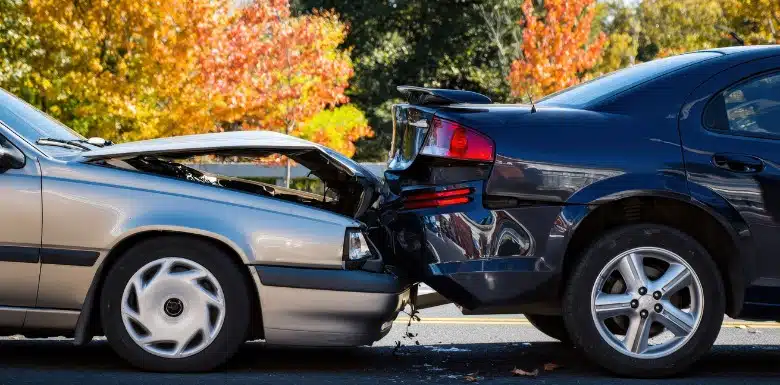
Most drivers in Nevada think they already know the answer to one of the most important liability questions after a crash: “If you hit someone from behind, you’re automatically at fault.”
That idea is repeated so often it feels like the law. Insurance adjusters push it. People at the scene repeat it. Sometimes even police officers speak in those terms. But that statement is not the whole truth under Nevada law. The rear driver is often presumed at fault, but “often” is not the same as “always.”
Why This Common Assumption Isn’t Always True
Fault in a real rear-end collision turns on the facts: how traffic was moving, why the lead car slowed, what the rear driver could realistically see, what other vehicles were doing, and how Nevada’s comparative negligence rules apply.
Why Determining Fault in a Rear-End Accident Matters
If you were involved in a rear-end collision, this distinction matters.
When Insurance Companies Assume You Are at Fault
You may be dealing with an insurance company that has already decided the crash is “obviously” your fault because your vehicle struck another from behind.
When the Lead Driver Assumes Full Responsibility Falls on the Other Driver
Or you may be the lead driver, told that since you were hit, the other driver will automatically bear full responsibility, no matter how you were driving. Both assumptions can be wrong.
How Nevada Law Determines Fault in Rear-End Collisions
This article is for people trying to understand rear-end accident fault in Nevada in a serious, real-world way. It does not talk about how much a particular case is “worth” or which injuries are common.
What This Article Covers About Rear-End Accident Liability
Instead, it focuses on one thing: liability. Some of the key questions about rear-end accident fault in Nevada, include:
- Who is at fault in a rear-end collision in Nevada?
- When is the rear driver presumed responsible?
- When does that presumption shift?
- How does Nevada’s comparative negligence law change the picture?
Important Disclaimer: Every Rear-End Accident Case is Fact-Specific
Nothing here is legal advice about any specific crash. Your situation will depend on details that no article can see: dashcam footage, timing differences measured in fractions of a second, road geometry, and what neutral witnesses saw. If you were in a collision and the fault is being disputed, you should talk directly with a lawyer about your exact facts.
Why the Rear Driver Is Often Presumed at Fault in Nevada
To understand why insurers and courts often begin with a presumption against the rear driver, you have to look at what the law expects from someone who chooses to drive behind another car. Nevada law does not guarantee that traffic will be smooth or predictable. It expects every driver to be ready for sudden changes: red lights, slowing traffic, construction zones, and unexpected hazards.
Nevada Law on Following Distance: What “Reasonable and Prudent” Means
Nevada law requires drivers to avoid following another vehicle “more closely than is reasonable and prudent,” considering speed, traffic, and road conditions. That “reasonable and prudent” language is deliberately flexible. It does not give a fixed number of seconds or car lengths, but it sends a clear message: as conditions change, your following distance must change too.
How Driving Conditions Affect Safe Following Distance
In practical terms, this duty means:
- Heavy, stop-and-go traffic: You must leave enough room to stop safely when vehicles ahead slow or stop suddenly.
- Highway speeds: You must maintain sufficient distance to react if traffic conditions change quickly.
- Poor visibility (rain, fog, darkness): You are expected to increase your following distance to account for reduced reaction time and visibility.
When a rear driver fails to adjust and crashes into the vehicle ahead, the law is quick to say: you did not follow at a safe distance. That is why, in many rear-end collisions, the rear driver is the obvious starting point for a fault analysis.
Common Rear-End Accident Scenarios Where the Rear Driver Is at Fault
Most rear-end accidents fall into a handful of familiar patterns. In these situations, Nevada law and common sense align, and the rear driver usually bears all or nearly all of the blame.
Rear-End Collisions at Red Lights and Stop Signs
A line of cars is stopped at a red light or stop sign. The lead vehicles have been stationary long enough that anyone paying attention should be able to see them. A driver approaches too quickly or looks away at the wrong moment and slams into the back of the last car in line.
- The front vehicles are exactly where they are supposed to be.
- The stop is legally required and completely predictable.
- The only person who could have prevented the crash is the rear driver who failed to slow down in time.
Stop-and-Go Freeway Traffic Accidents in Nevada
On I‑15, U.S. 95, the 215 Beltway, and other Las Vegas-area freeways, traffic often moves at highway speeds, then suddenly slows to a crawl, then speeds up again. Everyone who regularly drives in Nevada knows this pattern.
When a driver follows too closely and rear-ends a slowing vehicle because they simply cannot stop in time, fault usually lies squarely with the rear driver.
Distracted Driving Rear-End Accidents
A driver glances down at a text, adjusts a GPS, scrolls social media, or turns to deal with kids in the back seat. In that two‑ or three‑second distraction window, traffic ahead slows or stops. By the time the driver looks back, there is no way to avoid impact.
- Even if the driver insists they were “only” looking away for a second or two, that is often enough to erase the reaction time needed to brake safely.
- Phone records, passenger statements, and even admissions at the scene can turn this into a straightforward negligence case.
Rear-End Crashes Caused by Speeding or Unsafe Driving Conditions
If the road is wet, visibility is poor, or traffic is dense, a driver cannot rely solely on the speed limit. Driving 65 mph in heavy rain or dust on a road where everyone else has slowed to 40 is still negligent if it leaves no room to react to changing traffic ahead. When that driver plows into a slower vehicle, Nevada courts and juries often have no difficulty finding fault.
When the Lead Driver Is Not Acting Unreasonably
In all these situations, the lead driver is not doing anything unusual or unreasonable. Traffic behavior is fairly normal. The rear driver simply failed to fulfill the duty to follow at a safe distance and to remain reasonably attentive.
Why the Rear Driver Is Not Always at Fault in Nevada
Despite how common those scenarios are, Nevada law does not write “the rear driver is always at fault” into any statute. Instead, it applies comparative negligence and allows fault to shift when the facts warrant it.
Nevada’s Comparative Negligence Law in Rear-End Accidents
Under Nevada’s modified comparative negligence rule, more than one driver can be held responsible for a crash. Each driver’s conduct is evaluated, and fault is expressed as a percentage. An injured person’s damages can then be reduced by their own percentage of fault, and if that percentage is too high compared to the others, they may be barred from recovering.
Situations Where Fault May Be Shared
This matters immensely in rear-end crashes because:
- A lead driver can contribute to a collision by creating an unreasonable hazard.
- A third vehicle further back in traffic can cause a chain reaction that pushes one car into another.
- Equipment failures, like non‑working brake lights, can deprive the rear driver of a warning they had every right to expect.
In those situations, insisting that the rear driver must always be 100% at fault ignores the real complexity of what happened and how Nevada’s comparative fault rule actually works.
Common Exceptions to Rear Driver Fault in Nevada Rear-End Crashes
While every case is unique, most rear-end liability disputes that move beyond the simple presumption fall into four broad fact patterns:
- Sudden, unjustified stops and deliberate brake checking.
- Multi‑car chain reactions and pileups.
- Non‑working brake lights and other hidden-stop situations.
- Unsafe lane changes (cut‑offs) followed immediately by braking.
The stronger the evidence that your crash fits one of these patterns, the more realistic it becomes to challenge the automatic assumption that the rear driver is fully to blame.
Sudden Stops, Brake Checking, and Road Rage in Nevada Rear-End Accidents
At first glance, “sudden stop” sounds like a defense rear drivers use when they know they were simply too close or not paying attention. But the law draws a line between reasonable and unjustified sudden stops.
Why Reasonable Sudden Stops Do Not Shift Fault
Every driver has been in situations where traffic slows faster than expected:
- A light changes to yellow and then to red more quickly than anticipated.
- A vehicle ahead slams on its brakes for a hazard in the road.
- A pedestrian, cyclist, or animal appears unexpectedly.
In those cases, a sudden stop is exactly what a careful driver should do. A lead driver who brakes hard to avoid hitting someone or something is generally not negligent just because the stop was abrupt. The law expects the rear driver to be prepared for such real-world changes. If the rear driver hits the car ahead in that situation, the presumption against the rear driver usually applies.
Unreasonable Sudden Stops and Panic Braking in Nevada
Now consider a different set of facts:
- There is no traffic light ahead.
- No visible hazard is present.
- The road is clear, straight, and dry.
- The lead driver suddenly slams the brakes without warning.
Or:
- A driver realizes too late that they are about to miss an exit.
- Instead of safely continuing to the next exit, they hammer the brakes in a live lane to try to turn.
These are examples of unjustified or panic braking, where the lead driver’s actions may themselves be negligent. If a driver creates a sudden, unnecessary emergency in front of others, it is fair in Nevada to ask whether that conduct contributed to the resulting crash.
Brake Checking in Nevada: When Aggressive Driving Causes Rear-End Collisions
Brake checking is the clearest and most extreme version of this problem. A brake check usually involves:
- An intentional decision to hit the brakes hard.
- A motive to “teach” the rear driver a lesson, to intimidate them, or to vent frustration.
- No traffic‑related reason to slow or stop at that moment.
In fast, dense Las Vegas traffic, brake checking is reckless. It turns a car into a weapon. When a rear‑end crash follows a brake check, the lead driver may bear a significant share of the responsibility — sometimes most of it — even if the physical impact came from behind.
Why Evidence is Critical in Disputed Rear-End Accident Claims
Of course, not every claim of brake checking is true. Nevada insurers and defense lawyers hear this allegation frequently, especially from rear drivers who know they were following too closely. That is why proof matters: dashcam footage, surveillance video, and neutral witness statements can make the difference between an unproven accusation and a compelling liability argument.
If you can clearly show that a lead driver moved into your lane and instantly slammed on the brakes in an open roadway, those facts can dramatically change how fault is assigned under Nevada’s comparative negligence rules.
Multi-Car Rear-End Accidents in Nevada: Chain Reactions and Pileups Explained
Rear-end accidents become more complicated when more than two vehicles are involved. On Nevada freeways and major arterials, it is common to see chain reactions: one impact triggers another, and multiple vehicles end up with damage to both the front and rear.
Why the Sequence of a Multi-Car Crash Matters
Imagine you are driving Car B behind Car A. You stop safely when Car A stops. Then, a few seconds later, Car C behind you fails to stop and slams into your rear bumper, pushing you into Car A. From a simple, surface‑level view, Car A might think, “Car B hit me from behind, so Car B is at fault.” But that is not the real story.
You were already stopped safely. The force from Car C’s negligence is what shoved your car into A. In that case, Nevada law may place the bulk of the liability on Car C, even though the contact between A and B looks, at first glance, like just another rear-end collision. Now change the facts slightly:
- Car B was following too closely and tapped Car A before everything settled.
- Then Car C plowed into B, causing a second, harder impact.
Now both Car B and Car C may share fault: B for the initial impact and C for the secondary impact. How much blame each carries depends on speed, timing, and evidence.
Common Multi-Car Accident Scenarios on Nevada Roads
Some recurring examples in Las Vegas and across Nevada include:
- Sudden slowdowns near busy interchanges occur when multiple cars chain‑collide because several drivers were following too closely.
- Pileups in bad weather when visibility drops or the road surface changes quickly.
- Rear‑end dominoes in construction zones where lanes narrow and traffic compresses unexpectedly.
In each case, different drivers may have different levels of fault. A driver who was already stopped and simply got pushed might carry little or no responsibility. Another driver, speeding or tailgating farther back, might be the primary cause of the entire chain reaction.
Evidence Used to Determine Fault in Multi-Car Rear-End Accidents
Untangling who hit whom, when, and why often requires more than just the police diagram. Strong chain‑reaction cases rely on:
- Vehicle damage analysis – Where is the crush deepest? Do transfer marks show a push or independent braking?
- Event-data recorder downloads – When did each driver brake? How fast were they going? Were there multiple impacts?
- Video footage – Dashcams, traffic cams, and security cameras can show the order of collisions.
- Witness statements – Neutral witnesses may clearly recall which car started the chain.
Without this evidence, insurers tend to take the lazy route: blame the car directly behind each damaged vehicle and let everyone sort it out. That may help an insurer avoid paying, but it does not always reflect how Nevada’s comparative negligence law is supposed to work.
Non-Working Brake Lights and Hidden Hazards in Nevada Rear-End Accidents
Brake lights are one of the most basic safety systems on any vehicle. They tell the world behind you, in real time, that you are slowing or stopping. When they are missing or defective, they strip away a warning that every following driver has a right to expect.
How Fault Is Affected by Broken Brake Lights in Nevada
If a vehicle’s brake lights were out or partially out at the time of a crash, that fact can strongly affect the liability analysis, especially at night or in poor visibility. Some key questions become:
- Would working brake lights have given the rear driver enough time to react?
- Were conditions such that brake lights were a primary or necessary warning?
- Did the driver of the lead car know, or should they have known, that their lights were not working?
When Fault May Shift to the Lead Driver
If the answer to those questions tends to favor the rear driver, fault may shift. For example, on a dark highway with no streetlights, a vehicle that suddenly slows or stops without its brake lights on can be almost invisible until it is too late. A rear driver in that situation has a strong argument that the lead vehicle created an unreasonable danger.
Other Hidden-Stop Hazards That Affect Rear-End Accident Liability
Brake lights are not the only way a lead driver can deprive others of fair warning. Other examples include:
- Stalled vehicles in active lanes without hazard lights – A dark vehicle stopped in the middle of the lane at night is a serious hazard.
- Trailers or loads blocking rear lights – If a trailer or cargo completely covers a vehicle’s rear lights, the lighting system is essentially useless.
- Aftermarket modifications to lighting – Aftermarket modifications that dim or distort brake lights can make it much harder for others to see when a car is slowing.
Shared Fault Under Nevada Comparative Negligence Law
Again, these defects do not automatically absolve the rear driver of responsibility. Someone driving far too fast for conditions or failing to pay attention may still carry significant fault. But under Nevada’s comparative negligence rule, the driver whose defective equipment helped cause the crash can and often should share the blame.
Unsafe Lane Changes and Cut-Off Rear-End Accidents in Nevada
Another common Nevada pattern involves a driver abruptly cutting into another lane and then braking. Drivers who push their way into tight gaps, especially near exits, intersections, or the Strip, often end up at the center of heated rear-end disputes.
How Unsafe Lane Changes Lead to Rear-End Collisions
Consider this sequence:
- Car A is traveling in the right lane, leaving a reasonable gap to the car ahead.
- Car B in the next lane over sees an upcoming exit too late and makes a sharp, unsignaled lane change into the gap in front of Car A.
- Almost immediately, Car B slams on the brakes because the traffic ahead in the new lane is slower than they realized.
- Car A, despite paying attention, cannot stop in time and hits Car B from behind.
Why These Accidents Are Often Misunderstood
If you freeze the scene just at impact, it looks like a simple rear-end crash. Car A’s front end is in Car B’s rear. But the sequence leading up to that moment shows that Car B’s lane change created an impossible situation: Car B moved into a space that did not really exist and then braked hard without leaving Car A any realistic opportunity to avoid the collision.
The Duty to Merge Safely
Nevada law does not give drivers a free pass for making unsafe lane changes. When you move into a lane, you must ensure there is enough space not just to get in, but also to travel safely and to react to traffic already in that lane.
How to Prove an Unsafe Lane Change Caused a Rear-End Accident
To turn that story into a strong liability argument, you usually need more than just one driver’s word against another’s. Helpful evidence includes:
- Dashcam video from either vehicle or surrounding cars.
- Surveillance video from adjacent businesses, parking structures, or traffic cameras.
- Statements from neutral witnesses who saw the lane change.
- Damage patterns consistent with a last‑second merge.
With that evidence, an accident that insurers want to label as “just another rear-end” can be re‑framed as what it really was: a dangerous lane change that directly caused the crash.
Real-World Nevada Rear-End Accident Scenarios and How Fault is Determined
To see how all these rules work in practice, it helps to walk through real-world patterns that Nevada trial lawyers see repeatedly. The facts change, the street names change, and the people involved are different, but the legal themes stay surprisingly consistent.
How Road Rage Can Shift Fault in a Rear-End Accident
Picture a weekend night on Las Vegas Boulevard. Traffic is dense, tourists are crossing the street, and rideshare drivers are constantly stopping and starting. Car A is in the right lane, looking for a hotel entrance. Car B is behind, a little closer than ideal but still within a normal urban following distance.
A third car cuts in front of Car A and then exits, leaving a small gap. Car A’s driver, already frustrated, decides Car B is tailgating and “needs to back off.” In that moment of anger, Car A taps the brakes hard, not because of a hazard ahead, but as a message to the driver behind. Car B hits the brakes but cannot stop in time and rear‑ends Car A at low to moderate speed.
Why Initial Assumptions About Fault May Be Wrong
At the scene, Car A insists, “You hit me from behind, it’s your fault.” The officer notes “rear-end collision,” and both cars drive away. The insurance company for Car B quickly takes the position that its insured must be liable because the impact came from the rear.
When the claim is investigated properly, however, more comes to light:
- A rideshare dashcam in a nearby vehicle captured Car A’s sudden braking in the middle of a normal flow of traffic.
- Witnesses in another car say they saw no reason for Car A to slam on the brakes.
- The roadway had no intersection, crosswalk, or visible hazard ahead of Car A at the time of braking.
Under those facts, a trial lawyer can argue that Car A’s deliberate braking in moving traffic was negligent and that Car A bears a significant percentage of fault. Car B may still share some responsibility for following too closely, but the automatic “rear driver is always at fault” presumption no longer tells the full story.
Scenario 2: Multi-Car Chain Reaction Crash on I-15
Now consider a weekday morning on I-15 southbound, approaching a construction zone where a lane drops off. Cars in the right lane must merge left. Car A merges early and slows in a predictable way behind a long line of traffic. Car B follows Car A at a safe distance and begins to slow as well.
Behind them, Car C is speeding and weaving. The driver of Car C expects to shoot through the right lane before it closes, misjudges the distance to the traffic ahead, and only hits the brakes at the last second. Car C slams into Car B, pushing Car B into the rear of Car A.
Why Surface-Level Fault Analysis Can Be Misleading
At the scene:
- Car A has rear damage only.
- Car B has front and rear damage.
- Car C has front damage.
Without careful analysis, someone might assume Car B hit Car A first, and then Car C hit B. In reality, Car B was already slowing appropriately behind A when C’s speeding, late braking, and careless driving started the entire chain.
Evidence That Identifies the True Cause
If event‑data from the vehicles shows that:
- Car B braked several seconds before impact, and
- Car C did not brake until just before the crash,
then Car C’s insurer can be pushed toward accepting that their insured is the primary cause of both impacts. Car B, having slowed reasonably and been pushed forward by the collision, may carry little or no fault at all toward Car A. This is where comparative negligence really matters. Instead of blaming each car for the one in front of it, the law looks at who created the danger in the first place.
Scenario 3: Rear-End Collision Caused by No Brake Lights on a Dark Nevada Highway
Imagine a rural Nevada highway at night. There are no streetlights, and the only illumination comes from headlights and vehicle lighting. Car A develops an engine problem and begins to lose power. The driver of Car A gradually slows the car, but the brake lights do not work due to an electrical failure that existed before this trip. The car finally coasts to a near‑stop in the lane, with no hazards activated.
Car B is approaching at a reasonable speed for the road and conditions. The driver is not distracted and is maintaining a normal following distance from the vehicle ahead. That vehicle changes lanes to go around the slowing Car A at the last moment, revealing A only a short distance in front of B. Car B sees a dark, nearly stopped vehicle with no brake lights and no hazard flashers and hits the brakes. Still, there is not enough distance to avoid impact.
How Comparative Negligence Applies
On paper, this looks like a simple rear-end crash. In reality, the driver of Car A created a serious hazard by traveling at night with nonfunctional brake lights and by failing to activate the hazards as the car began to lose speed.
Under Nevada’s comparative negligence rules:
- Car B’s lawyer will argue that Car B was driving at a safe speed, was not distracted, and only encountered Car A at the last possible moment.
- Car A’s failure to have working brake lights and hazard flashers may be seen as a major cause of the crash.
- A judge or jury could reasonably assign a large share of fault to Car A, even though Car B’s front end struck the rear of A.
Once again, the simple visual of “front of one car meets back of another” does not capture the reality of how the collision occurred.
Scenario 4: Unsafe Lane Changes and Rear-End Collision on a U.S. 95 On-Ramp
On a busy day, a driver in Car A is entering U.S. 95 using an on‑ramp that merges into fast‑moving traffic. Instead of matching the speed of freeway traffic, Car A comes down the ramp too slowly. As the merge point nears, the driver panics, jerks the wheel into a narrow gap in the right lane ahead of Car B, then immediately taps the brakes because the car ahead of A is closer than expected.
Car B has been traveling in the lane, leaving a standard following distance to the car ahead, before Car A cuts in. When A dives into that gap and then brakes, the space in front of B disappears. Even if the driver in B is paying attention and brakes promptly, there may be no physical way to avoid rear‑ending A.
Key Evidence in Unsafe Lane Change Cases
The key facts a trial lawyer would want to prove are:
- Car B had a safe following distance before Car A’s last‑second merge.
- Car A entered the lane without leaving enough space to adjust to the speed of traffic safely.
- Car A then hit the brakes immediately, creating an emergency of its own making.
Here, the fact that Car B’s front struck Car A’s rear does not automatically mean B is fully at fault. Car A’s merge and immediate braking can be characterized as the primary negligence, with B’s conduct analyzed in light of the situation A created.
Nevada’s Comparative Negligence Rule in Rear-End Accidents
All these patterns — sudden stops, brake checking, chain reactions, hidden stops, unsafe lane changes — ultimately feed into one legal framework: Nevada’s modified comparative negligence rule. This rule does not just decide “who” is at fault; it decides “how much” each person is at fault.
How Fault Is Divided in Nevada Rear-End Collision Cases
In a rear-end crash, a court or jury might assign fault like this:
- Rear driver: 80% at fault for following too closely and not paying attention.
- Lead driver: 20% at fault for having no brake lights in the dark.
Or:
- Lead driver: 70% at fault for brake checking or executing an unsafe lane change.
- Rear driver: 30% at fault for speeding or tailgating.
In a multi‑vehicle pileup, the distribution might involve three or four drivers, each with their own share. These percentages have real consequences: they affect settlement negotiations, trial outcomes, and how much money actually changes hands.
Why Insurance Companies Push the “Rear Driver Is Always at Fault” Narrative
Insurers like simple rules that minimize what they have to pay. If they can stamp your claim “rear driver = at fault, case closed” from day one, they do not have to dig into the messy details:
- Did the other driver slam on the brakes without reason?
- Did a third vehicle actually cause the chain reaction?
- Were brake lights or hazard flashers working?
- Was there an unsafe merge just before the impact?
If you let that narrative stand unchallenged, the insurer may deny your claim, reduce its offer, or refuse to negotiate fairly. To fight back, you need more than opinions. You need evidence and a clear legal theory grounded in Nevada’s comparative negligence rules.
How Evidence Can Change Fault in a Rear-End Accident Case
On paper, rear-end crashes look simple. On the road, they often are not. The difference between losing and winning a liability battle often comes down to the quality of evidence gathered early.
Key Evidence Used to Prove Fault in Nevada Rear-End Accidents
Some of the most powerful tools in Nevada rear-end cases include:
- Dashcam footage – A few seconds of video can prove or disprove brake checking, unsafe lane changes, traffic speed, and following distance far better than competing verbal stories.
- Traffic and surveillance video – Cameras at intersections, on buses, or on nearby buildings can capture the crash from another angle. This footage often disappears quickly if no one requests it.
- Event-data recorder (EDR) downloads – Many vehicles record data on speed, braking, and throttle position for seconds before a crash. This information can show whether and when each driver actually hit the brakes.
- Vehicle inspections and photos – The pattern and depth of damage can suggest whether a car was stationary, slowing down, or already in motion at impact, and whether another impact pushed it forward.
- Police reports and officer notes – While not perfect, police reports often record citations, driver statements, lighting conditions, and visible vehicle defects, including broken lights.
- Independent witnesses – Neutral third parties with no stake in the outcome can carry enormous weight, especially in road-rage or brake-check disputes where each driver blames the other.
Gathering and preserving this evidence quickly is critical. Video can be overwritten. Vehicles can be repaired or scrapped. Witnesses can move or forget details. The sooner you secure proof, the harder it becomes for an insurance company to hide behind a lazy presumption about rear-end fault.
Practical Takeaways for Nevada Rear-End Accident Claims
Putting all of this together, here is how you should think about rear-end accident fault in Nevada if you are involved in a crash:
- Do Not Assume the Rear Driver is Automatically at Fault – If the other driver brake‑checked you, made a dangerous lane change, or had no brake lights, the liability analysis is more complicated than “rear driver always at fault.”
- Do Not Assume You Are Completely Free of Fault – If you slammed on the brakes for no reason, cut someone off, or drove with obvious equipment defects, you may still carry part of the fault.
- Focus on What You Can Prove, Not Just What Feels Fair – The strongest cases combine clear facts with strong evidence: video, data, photos, and neutral witnesses.
- Understand That Fault Is Assigned in Percentages – Nevada’s comparative negligence system allows fault to be shared. Even if you made mistakes, you may still have a valid claim if the other driver’s negligence was greater.
- Act Quickly to Preserve Evidence After a Rear-End Crash – The longer you wait, the harder it becomes to challenge an insurer’s easy narrative that you, as the rear driver, must be entirely at fault.
Speak With a Nevada Rear-End Accident Lawyer Today
Do not let an insurance company decide fault before the real facts are examined. If your rear-end crash involved a disputed stop, brake checking, broken brake lights, or a multi-car chain reaction, you need lawyers who are ready to fight for you. Call the experienced trial lawyers at Oronoz & Ericsson at (702) 878-2889 for a free consultation and put a litigation-minded team on your side.